

Ethiopia
Ethiopia
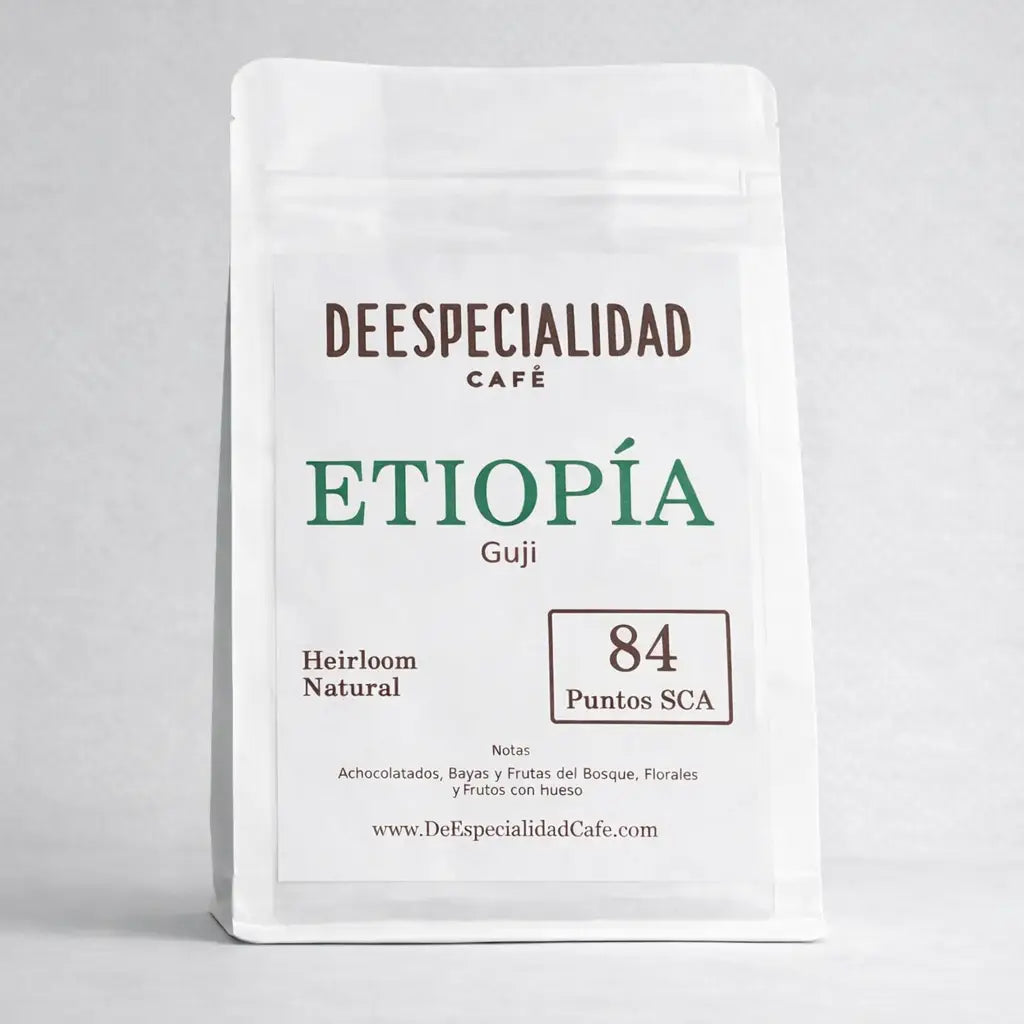
A vibrant and fruity coffee, with notes of blueberry, strawberry, and red plum, accompanied by a subtle chocolatey and floral background.
Couldn't load pickup availability
Share
Coffee information
Balanced coffee with chocolate and berry notes, highlighting blueberry, red plum, and strawberry, with floral hints. Medium acidity and body.

Origin
About this coffee
Guji
To speak of Guji is to speak of the purest heart of Ethiopian coffee. Within Ethiopia — considered the birthplace of coffee — this region is part of the Oromia territory.
It is in this context that Abyssinia is born, a coffee that gathers all that heritage. It comes from this very region of Guji and is processed by a family exporter that collaborates with various small local producers. With a long trajectory, this family places special emphasis on the cupping of each lot, ensuring consistency and quality, while building solid and close relationships with both coffee growers and their clients.
The result is a coffee that not only reflects its origin but also the human care behind each bean.
Frequently asked questions
What grind should I choose?
Each coffee maker needs a different grind. These are the available options:
- Whole Bean — If you have a grinder at home and prefer to grind just before brewing.
- Espresso — For espresso machines with a portafilter, under pressure.
- Filter — For drip coffee makers, V60, Chemex, or Melitta.
- Moka — For Moka pots (the classic stovetop one).
- French Press — For plunger coffee makers.
- Aeropress — For the Aeropress method.
- Cold Brew — Coarse grind for cold brew coffee.
- Naked Portafilter — For bottomless portafilters on espresso machines.
I'm just starting out, what coffee can I choose?
If it's your first time buying specialty coffee, we recommend starting with balanced and easy-to-drink coffees.
To start
Latin American coffees are usually a safe bet, with soft and balanced flavors. Origins such as Brazil and Colombia are ideal to start with.
When you want to try something different
You can explore coffees with processes such as natural or honey, which usually have more fruity or intense profiles. For example, Ethiopia.
How many cups do 250g and 1kg make?
Using about 10g per cup as a reference: 250g yields approximately 25 cups and 1kg yields about 100 cups. This may vary depending on the brewing method and the intensity you prefer.
When is coffee roasted and how do I store it?
We roast daily so that you always receive it as fresh as possible.
You can store it in the same bag you receive it in — it has a degassing valve. Store it in a cool, dry, and dark place.
To enjoy it at its best: ground, consume within 2–4 weeks; whole bean, it stays fresh for up to 6–8 weeks.
Is it very acidic? Is it 100% Arabica?
Regarding acidity: Nothing like commercial coffee. No burnt or harsh flavors. The acidity is like that of a ripe fruit — it brings freshness and complexity.
Regarding origin: Yes, all our coffees are 100% specialty Arabica, selected for their quality and cup profile.
Why is your coffee cheaper than other specialty coffees?
Our goal is to make specialty coffee accessible to more people.
We work with tight margins and optimize our processes to offer high-quality coffee at a lower price than many brands in the industry, without compromising on bean quality or roast.
